пятница, 30 июня 2017 г.

Make the Face Pull a Staple Exercise

Tip:  Make the Face Pull a Staple Exercise

Got bad posture or a permanent slouch? Do the face pull. Here why and how to do it.

Face-pulls
The face pull may be the most versatile training tool in our arsenal for remediating poor shoulder and thoracic positioning. It provides the exact opposite movements that we're continuously pulled into on a daily basis – namely sitting down and looking at computer, phone, and TV screens.
This movement incorporates humeral horizontal abduction and external rotation of the shoulder and retracts the shoulder blades – all helping combat the hunched over, constantly adducted, internally rotated and protracted posture. If you're slouching over a phone or computer reading this, that's the poor position we're talking about.
Don't be fooled into thinking the face pull is just another dainty corrective exercise. Sure, it can be programmed into any successful dynamic warm-up or activation technique for prepping the shoulders and rotator cuff, but you can also load this pattern up for a results-producing training effect.
When going heavy, the externally rotated end range position of the shoulder will be largely lost secondary to load, but that's ok. Pull back hard and hit your posterior shoulder girdle musculature in strength and hypertrophy rep ranges. As for turning up the metabolic stress in a tissue, extremely high rep ranges with increasing tension will light a fire on those posterior delts.

The Banded Face Pull

Tip: The Banded Face Pull

Use this modification to make the face pull exercise even more effective.

The standard face pull performed with a rope or handles is great for back development and posture. Here's how to make it even better. 
Reach your hands through a band, anchoring the band along the outside of the wrists. Turn your palms down. Now use the standard "elbows up and out" form, pulling to your nose or forehead. Squeeze at the top. 
The band will add side-to-side resistance, forcing you to fight hard to spread the band apart.

Test Your Relative Strength in 20 Seconds


7 Bodyweight Challenges You Gotta Try

Test-your-relative-strength-in-20-seconds-
Most of us recognize the importance of testing. After all, we need to make sure we're actually getting stronger and not just spinning our wheels. The most common test in the gym is the one-rep max, and it's certainly a useful metric.
But if we're interested in our overall health and durability in addition to putting up big weights, the 1RM isn't the only measure we need to consider. After all, what good is having a 600-pound deadlift if you're so fat you can barely hold onto a pull-up bar, let alone perform a single chin-up?

Absolute Strength vs. Relative Strength

Absolute strength refers to the total amount of weight you can lift – your 1RM. Relative strength refers to your strength compared to your bodyweight.
Take two lifters. One weighs 300 pounds and deadlifts 600 (double-bodyweight). The other weighs 167 pounds and deadlifts 500 (triple-bodyweight). Which lifter is more impressive? You can easily make the case for either one, but there's very little question about which person is going to be more versatile, not only in the gym, but also in daily life.
For most people, both absolute and relative strength matter. So how do you test for relative strength? Divide all of your 1RM's by your bodyweight and compare it to your friends? Actually, there's a much easier way, one that doesn't require a calculator or even any external resistance. It's called an "iso hold."
Below are seven insanely challenging iso hold tests of bodyweight relative strength listed in order of increasing difficulty. Master these challenges, in addition to your big lifts, and your all-around strength will be unparalleled. Each challenge only takes 20 seconds.

1 – Chin-Up Iso Hold

Chin-Up Iso Hold
  • Metric: Grip strength
  • Standard: Hang from a pull-up bar with your preferred grip and your hips slightly piked for 20 seconds.
  • Advanced version: Do it with only one arm at a time.
  • In the case of failure: Spend several weeks training chin-up hang cluster-sets. Begin with sets of four 5-second holds and progress to longer holds.

2 – Split-Squat Iso Hold

Split-Squat Iso Hold
  • Metric: Lower-body pushing strength
  • Standard: Begin with the feet hip-width apart and take a large step backwards with one leg. Drop straight down so your back knee is an inch off the floor, keeping your torso and the shin of your front leg nearly perpendicular to the floor. Hold this position for 20 seconds. Switch the front and back legs and repeat.
  • Advanced version: Perform the same test, only with the back foot off the ground (an airborne lunge).
  • In the case of failure: Spend several weeks training pause split squats. Begin with 2-second pauses and work up to 5-10 seconds per rep.

3 – Back-Extension Iso Hold

Back-Extension Iso Hold
  • Metric: Posterior core strength
  • Standard: Lock your lower legs into place on a back extension (or similar rig) and fold your arms across the chest. Push the hips into the pad to lift your torso so it's parallel to the floor. Your body should form a straight line from head to heel. Without overarching your back, hold this position for 20 seconds.
  • Advanced version: Extended arms overhead.
  • In the case of failure: Spend several weeks training paused back extensions, regressing to 45 degree back extensions if necessary. Begin with 2-second pauses and work up to 5-10 seconds per rep.

4 – Ab Wheel Roll-Out Iso Hold

Ab Wheel Roll-Out Iso Hold
  • Metric: Anterior core strength
  • Standard: Begin in a tall kneeling position, with the knees hip-width apart. Maintaining a flat back, roll the ab wheel all the way out so the body is parallel to the floor and hold it for 20 seconds.
  • Advanced version: Perform the same test from a deficit – knees elevated higher than hands.
  • In the case of failure: Spend several weeks training anti-extension core exercises like dead bugs, planks, and paused ab wheel roll-outs. Begin with 2-second pauses and work up to 5-10 seconds per rep.

5 – Wall-Supported Handstand Iso Hold

Wall-Supported Handstand Iso Hold
  • Metric: Upper body pushing strength
  • Standard: Begin by standing adjacent to a wall with the hands a little wider than shoulder-width apart on the floor. Kick the legs up overhead to rest them on the wall. Keeping the hips off the wall, hold this position for 20 seconds.
  • Advanced version: Use one arm at a time.
  • In the case of failure: Spend several weeks training feel-elevated pike position push-up holds and work up to wall-supported handstand holds.

6 – Tuck Front Lever Iso Hold

Tuck Front Lever Iso Hold
  • Metric: Upper body pulling strength
  • Standard: Begin in a dead hang from a pull-up bar with a neutral or pronated (overhand) grip. Bring your knees to your chest and, moving entirely from the shoulders, rock back so your torso is parallel to the floor. Hold for 20 seconds.
  • Advanced version: Perform the same test, only in a full front lever, with legs fully extended.
  • In the case of failure: Spend several weeks training pull-overs and stiff-arm pull-downs, working up to paused tuck front levers.

7 – Nordic Hamstring Curl Iso Hold

Nordic Hamstring Curl Iso Hold
  • Metric: Lower-body pulling strength
  • Standard: Begin in a tall kneeling position with the knees hip-width apart and the heels locked in place. (If you can't duplicate the setup, just have a partner hold you in the correct position.) Keeping your hips fully extended, slowly descend a few inches towards the floor and hold that position for 20 seconds.
  • Advanced version: Do it with arms overhead.
  • In the case of failure: Spend several weeks training various hamstring curl variations, working up to eccentric Nordic hamstring curls with a pause. Begin with 2-second pauses and work up to 5-10 seconds per rep.

Barbells Behind Bars


10 Years of Prison Weightlifting

Prison

Here's what you need to know...

  1. Weightlifting is vital to the social structure of some prison yards. Just know your area or "court" and stick to it.
  2. Because of occasional fights, there aren't any dumbbells lighter than 35 pounds (it's hard to get any momentum going when you're trying to smash a guy with a 60-pound dumbbell). Instead, courts fight one another with shanks and fists.
  3. Sometimes guys come out of five years of solitary with a Sandow body. They obviously don't have equipment, so they train by manipulating gravity.
  4. Soy protein makes up a large component of the state-issued meals, so there's a whole underground economy in providing bodybuilders with meat and eggs.
  5. To say that prison weightlifting is good for self-esteem isn't enough. It also builds willpower and dedication, and gives men a sense of accomplishment. For many, it's the first time they've felt any sense of achievement.

The Lowdown

Prior
I was addicted to heroin. I owed a bunch of money to some local Ukrainians, so I robbed a series of people at knifepoint in order to pay off the debt. One of the victims recognized me and later on I got pinned for the other robberies. I was sentenced to prison for ten years.
But I wasn't always "that guy." Before the heroin, I got a degree in history. Learned three languages. I worked in publishing and taught as well. I got married to a Hungarian woman who understood my Soviet background. (My parents only moved to the states in 1977). My father is a big deal writer in Russia and my mother a corporate warrior. Obviously, my addiction and subsequent incarceration came as a big surprise and disappointment. I worked out, too, before going to prison. I was a member of a health club and when I lived in Copenhagen I used to go to a boxing gym.

Lift or Get Crushed

While waiting in county jail, there was nothing to do but eat pork rinds and cupcakes and deal with the stress. I put on 30 pounds while awaiting sentencing. I wasn't too pleased with this, and knew that I'd eventually get some trailer visits from my wife, so I felt that I had to drastically improve my body. But it wasn't only that. I was now in a hostile, dangerous and altogether foreign world, and I was going to be there for ten years, so I joined the weightlifting cult immediately. I eventually devolved into a shallow creature that wore ever-tighter shirts and tried to keep his vascularity up, even in the jailhouse mess hall. It was easy to revel in muscle, and many men in prison do just that.

Not Like Planet Fitness

Prison weightlifting is its own subculture, with a history, customs, heroes, myths, and as any proper subculture should have, its own vocabulary. As a result, there are several colorful terms for going out to the yard and lifting weights. One is "getting money," which oddly enough also refers to masturbation. "Pushing iron," "getting right," and "throwing steel" are also terms that mean weightlifting. There's also a sub-subculture that limits exercise to the pull-up bar, and the guys who practice this are "barmen." Their methods are rather ingenious as they manage to train pretty much every body part by manipulating their own bodies over, under, and around the pull-up bar, including legs, which is done by suspending oneself from the bar with two sturdy leather weight belts.
The barmen have no idea that they've essentially reproduced much of the gymnastics culture of Eastern European fitness without being able to find Romania on the map. Of course there's a rivalry between barmen and weightlifters. The barmen can never achieve the same mass, but have incredibly defined torsos on them which none of the weightlifters could replicate. The barmen stand in lines in front of the pull-up bar and make fun of the lumbering weightlifters, while the guys with rust on their hands from the pig iron tell the barmen to beware of the rising wind, which might blow them away.
The weight belts are a vital part of the culture as they're made to order by jailhouse leatherworkers. They usually express ethnicity or affiliation. Mine had the double-headed Imperial Russian eagle on it and cost fifty bucks, while others had images of gorillas, Hitler, tanks, bulls, and every flag one can think of.
Belt
Calling this simply exercise is a gross understatement. Weightlifting is popular enough and vital enough for the entire social structure of some prison yards to be arranged around it. A prison I spent four years in, Greenhaven Correctional Facility, had its yard divided into 15-foot "courts." Each one had an affiliation of sorts. Some were for members of a specific gang, like the Blood Court, while others, like the Italian Court focused on ethnicity. I was a member of the Irish, which took in all the ones with less clear categories.
However, to join a court one must have clean "papers," which meant no history of informing and no sex charges. There was, however, one court labeled as "Christian" that would allow men to exercise without showing paperwork. Every court had a duplicate set of rusty, awfully welded iron weights and dilapidated machinery. My court was run by John Gotti in the 1970's. As a result, we all used "John's weights."
Visiting from court to court is only done by invitation; doing so without an invitation is a challenge to a battle. Because of occasional fights, there aren't any dumbbells lighter than 35 pounds (it's hard to get any momentum going when you're trying to smash a guy with a 60-pound dumbbell). Instead, courts fight one another with shanks and fists.
So lifting weights in prison involves participating in a social structure not unlike a gang, at least in New York State. In many other states, the weights have been removed to combat this subculture and to satisfy public fears of bulked-up, American History X cons walking the streets after they get out of prison.

Overtraining is a Way of Life

I was in 12 different prisons, and while they all had different recreation schedules, access to the yard and its rusty iron wasn't usually an issue. Likewise, in the winter, we all just worked out in the snow. In truth, it felt extra-hardcore.
One thing I must say is that most everyone in prison overtrains. When guys sometimes get certified as personal trainers later on, they laugh when they look back at the ridiculous hours they put in. But I'm just as guilty of overtraining myself. It's a competitive atmosphere, and everyone wants to "get right" as soon as possible, and there are racial overtones as well, since the black and white communities of weightlifters (who never, ever, share weights with each other) are in a constant battle for supremacy. Better a war of abs than shanks, I suppose, but in any case, I followed a six-day a week routine with several sessions of calisthenics added in during the afternoons. I also ran five miles every Sunday, so in essence I had no days off, which I now realize is counterproductive, but I wasn't the only one doing it and managed to get results anyway.
Not everyone overtrains. There are some men in there who have been exercising for so long that it takes very little maintenance for them to look cut and big all the time. After all, the average sentence for murder is 25 to life, so after two decades of lifting the weights in the yard, they gained quite a bit of muscle and they don't have to work that hard to continue looking good. But some of these older guys have an odd appearance. Their faces, topped by either heads of grey hair or baldness, are wrinkled, old and stressed, but they have these young men's bodies below. It's a strange contradiction, but often seen in men who have done serious time.

The Prison Workout

If I had to put together a "Prison Workout," it would look something like this:
  • Training: Go as hard as possible most of the time with whatever you can get your hands on; high volume, big exercises, and body part splits.
  • Preparatory activity: None.
  • Accessory/supplemental/active recovery: Absent.
  • Chance for injury: Significant.
  • Calories: Eat whatever you can find.
  • Supplementation: Whatever you can get.
  • Rest: Lots of it, enforced.

A Carton of Newports For 2 Pounds of Hamburger Meat

This was American prison, so the calories aren't as much the problem as the quality of them and the lack of protein. You can basically fill yourself with simple carbs at every meal through the endless bread, rice, potatoes, and noodles that make up most of the meals. Complex carbs are harder to come by, so oatmeal, yams, and wheat bread are actually trafficked in. And the protein is the biggest problem. The soy protein that makes up a large component of the state-issued meals is terrible for you. And it tastes bad.
So there's a whole underground economy in providing bodybuilders with whiting fillets and eggs and hamburger meat and hot dogs and meatballs and chicken legs from the warehouses. There is also commissary, in which tuna and mackerel are sold. The max I could spend on food was 50 bucks every two weeks, and most of it went to cans of fish. I can only imagine my mercury levels, but everyone did this. Jack Mack, which is the cheapest source of protein -- 72.5 grams in a can, for $1.09 -- brings up memories of bodybuilding to any ex-con.

Stretching is for Pussies

Stretching was something pussies did. Preparatory work of any kind is considered effeminate. Unfortunately, we're dealing with a poorly educated population with a mass machismo complex, so there's hardly any work done of that nature. And of course it leads to injuries. Massages I witnessed only once. There was a chiropractor in for beating up his wife. He had no money coming in from his family, for obvious reasons, and decided to make some by setting up shop on a table in the yard. He had oil and seemed to know what he was doing. The Latin population lined up, but the guards soon put an end to it because of the rules against "homosexual contact." It was just that kind of world.
I suffered three slipped disks that I continue to live with, but that was purely my own fault since I followed the lead of a steroid using, over-enthused simpleton. He was massively strong and I was very enthusiastic. We put 550 pounds on a bar and tied our hands to it do shrugs. I was in a hospital two days later and I take medication to deal with it to this day, even though my wife is a yoga teacher and helps me with it. Every prison clinic is full of guys who were injured through weightlifting. Rust in the eyes, slippery weights in the rain, and squat falls are the most common. The weights are such crude objects, and left outside, they're even more of a hazard. However, there would be a riot if they were ever taken away.

Steroids Can't Help You if You've Been Thrown in the Box

I was offered dianabol, in an unknown and powdered amount, for fifty bucks. More common was creatine smuggled in and sold for the same price, usually in a bottle of creamer. That made loading the stuff an expensive proposition. The same fellow I injured myself with had his grandfather bring two loaded syringes of something on a visit. He told me it was two months' worth of steroids in two intramuscular shots. He took them and lay in a cot sweating for a day afterwards, but in two weeks he had an extra 10 pounds of lean muscle. However, recreational drugs are more common in prison, as the bodybuilding guys are usually a fairly cautious and level-headed crew. No one wants to go to the box and not be able to lift for a year.

Training While in the Box

The ingenuity of the methods men use to exercise when they're locked in a small space with essentially nothing is a fascinating topic. I've seen many a curl done with a bag or bucket of water, but it's the callisthenic exercise that always impressed me. Sometimes a fellow will emerge out of five years of solitary with a Sandow body. He obviously didn't have access to equipment or even room, so he had to train by manipulating gravity. Much of this is done upside down, so a strange side effect of incarceration is that many prisoners develop the balance to walk on their hands. Usually there's nothing to hang from inside of cells, for obvious reasons, but most prisoners find a way to suspend themselves. I have seen sheets ripped up and tied into the fencing as a makeshift pull-up bar. American solitary terms are handed out in denominations of years at a time, so there's plenty of time to kill and think up things like this.

Enforced Rest Periods

While recovery time isn't considered an important part of prison weightlifting, most prisoners end up fairly well rested because of security concerns. In maximum-security prisons, where each prisoner has his own cell, the guards look forward to the moment when all of the inmates are locked in. When all the prisoners are in, that's when the cops feel safe and truly feel like the joint is theirs. As a result, the more corruptly a prison is run, the earlier the yards close. I've been in a place where everyone was in by 7:30 PM. Supper was at 3 PM. Many prisoners, especially the ones for whom reading is not important, adjust to this odd schedule by going to sleep as soon as they get locked in. Prisoners are often like cats, able to sleep enormous amounts of time because they prefer their dreams to reality. In the end, the bodybuilders wind up locked in and rested just because of jailhouse security.

I'll Finish My Workout After the Riot

Inside prison are entire mythologies about the great lifts of yore. However, I'd prefer to speak on what I witnessed personally. My acme was a 315-pound bench press at the weight of 180 pounds, but there are some real monsters walking around. Eastern Correctional Facility at Napanoch, which hosts a bodybuilding contest ever year, had men walking around who weighed over 300 pounds and were in the over-1000 pound club, which meant a combined weight of over a thousand pounds lifted in flat bench, squat, and deadlift. I'll never forget one guy, Hassan Nelson, who had shot knees from years of squats but could still probably participate in those strongman shows on television. He had worked out five days out of seven until making his first parole board after 25 years.
Of course, not everyone can achieve such results. Prison interrupts workouts all the time, whether through lock-downs, riots, or other disciplinary issues. But I must add that in my experience, the bigger the guy, the nicer he was. My theory is that it was because they had confidence and didn't feel the need to behave aggressively.
Of course, there are plenty who give it up. I felt it myself; the time weighs on you. After half my time was done and there were still five years to go, I had this awful feeling of not wanting to do anything difficult anymore. It seems to hit everyone at some point. Usually the bodybuilders get through it because they have a passion.

A Path Towards Perhaps Their Only Success in Life

After
Most men are in prison not because they're strong, but because they were weak. I ended up going at the absolute weakest point of my life when I was suddenly addicted to an expensive drug and without the funds to pay for it. I had just committed an idiotic crime and I didn't feel great about myself, especially because of the way I hurt my wife and family. My avenues of professional achievement were cut and I saw little chance of making anyone proud of me, but what I could do was work on my own body. I could watch myself grow and develop. And eventually even my disappointed family recognized the discipline and hard work I had put in.
The same goes for many of the men there. The ones that have killed have done so out of temperament problems and mental illness, or alcoholism and addiction. There are no super-villains in prison, just a bunch of sad cases. For the guys that could be termed "losers," bodybuilding is a path towards perhaps their only success in life. After all, most prisoners have not succeeded in education or employment. They haven't built families or bought homes. Many have never been on an airplane. Their life is entirely without any memory to be proud of.
To say that weightlifting in prison is good for self-esteem isn't enough. It also builds willpower and dedication. It also gives men a sense of accomplishment. Most of the guys aren't on juice; they truly have worked hard and long for what they have. That's why weightlifting in prison is popular, and perversely, why the administration isn't fond of it because they see it as the only activity a prisoner can do to make himself confident for the first time in his life.
Note: James Heathers assisted with this article.

Каков реальный механизм отталкивания при прыжках с разбега?


          Недавно я обнаружил, что подавляющее большинство людей не имеет верного представления о принципиальных различиях между механизмом финального разгона тела атлета вверх при прыжке с места и механизмом финального разгона тела атлета вверх при прыжке с разбега. Люди, в том числе и дипломированные специалисты по лёгкой атлетике, ошибочно считают, что каким ни был бы прыжок, — хоть с места, хоть с разбега — ведущая роль в основном разгоне тела вверх всегда принадлежит именно мышцам-разгибателямтолчковой ноги. То есть что при прыжках в высоту и в длину с разбега финальный подброс тела осуществляется, как и при прыжке с места, в основном за счёт сократительной работы мышц бедра и икры толчковой ноги. Вот пример таких представлений в Рунете — "Прыжки в длину с разбега":
          "Отталкивание. Для отталкивания в прыжках в длину с разбега характерна большая мощность усилия, которое называют «взрывным» при трудной координации движений прыгуна.
          Отталкивание при прыжках в длину принято делить на 4 фазы:
          Постановка ноги прыгуна на грунт с моментальным нарастанием (постепенным увеличением) и спадом усилий.
          Так называемая амортизационная фаза, суть которой заключается в уступающей работе с последовательным и постепенным повышением усилий сопротивления.
          Максимально возможное сгибание коленного сустава с одновременным развитием статических (удерживающих) усилий.
          Отталкивание прыгуна с работой мышц ног, при достаточно быстром понижении мощности рабочих усилий.
          Силовой режим работы мышц характерен для первых 3-х фаз,а скоростно-силовой постепенно преходящий скоростной — для 4-ой.
          Следует помнить, что сгибание ноги перед прыжком в длину с разбега в коленном суставе не должно превышать 40°, так как это, скорее всего, приведет к позднему ее разгибанию."
          Совет "помнить, что сгибание ноги перед прыжком в длину с разбега в коленном суставе не должно превышать 40°", конечно, не стоит принимать во внимание: автор совета, скорее всего, имел в виду вовсе не получившуюся чушь. Скорее всего, автор совета имел в виду угол 140°, и этот угол нужно не "превышать", а, напротив, если можно так выразиться, не "занижать". То есть угол в коленном суставе не должен оказываться меньше 140°. Иными словами, этот угол не должен слишком "обостряться".
          А вот ещё один "прыжковый" текст — уже малость пограмотней: всего лишь с одним плеоназмом "опускается вниз" — "Техника прыжка в длину (Изд. "Академия", 2013 год)":
          "В последнем шаге разбега толчковая нога выносится вперед, а затем опускается вниз беговым движением. Она ставится на отталкивание перед собой, почти выпрямленная в тазобедренном (165-170°) и в коленном (175-178°) суставах, на всю стопу. Угол постановки ноги — 65-70°. Туловище занимает вертикальное положение. Согнутая маховая нога выносится вперед, таз «входит» на толчковую ногу.
          При далекой постановке ноги, при уменьшении угла постановки, при увеличении длины последнего шага увеличивается время фазы амортизации. Спортсмен начинает разгибание ноги слишком рано, когда тело находится еще сзади точки опоры, происходят большие потери горизонтальной скорости. Слишком близкая постановка ноги, «под себя», увеличение угла постановки приводит к позднему разгибанию, спортсмен не успевает в полной мере приложить усилия, — уменьшается угол вылета, снижается высота полета. 
          В фазе амортизации происходит незначительное сгибание толчковой ноги, минимальная величина угла сгибания в коленном суставе (угол амортизации) не превышает 160°".
          Итак, даже узкие специалисты, как можно видеть, твёрдо уверены, что без силового разгибания толчковой ноги (хотя бы с угла 160°) хорошего прыжка произойти не может.
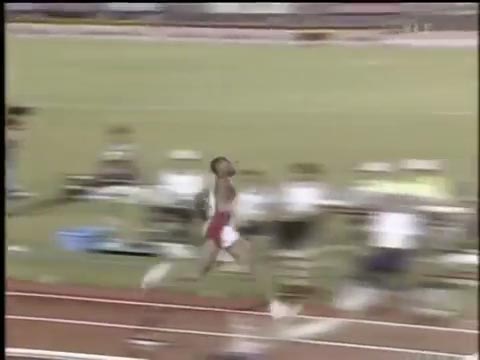
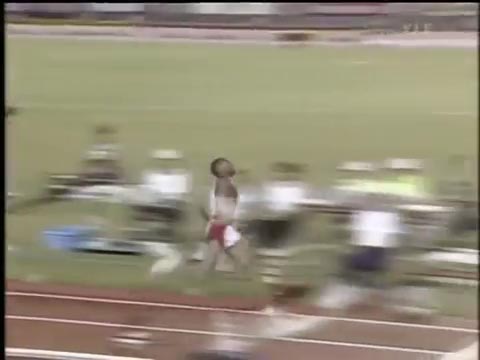
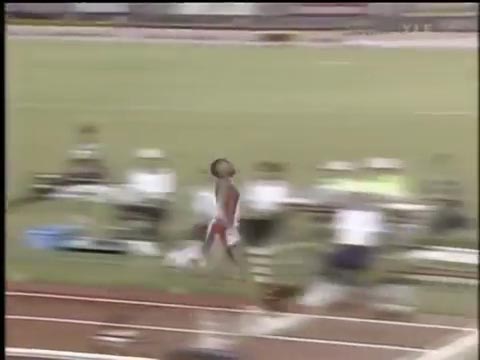
          Однако если посмотреть на исполнение лучших в мировой истории прыжков — например, рекордного на сегодня прыжка Майка Пауэлла на 8 м 95 см,


00:00
 
00:00


— а вот ещё и три последовательных кадра постановки Пауэллом ноги и отталкивания, —
Прыжок Майка Пауэлла
то можно заметить, что в процессе контакта ноги с бруском для отталкивания никакое сгибание-разгибание толчковой ноги места не имело. То есть Пауэлл как поставил ногу на брусок почти полностью прямой, так и оттолкнулся этой же полностью разогнутой в колене ногой.
          Почему же дело в реальности обстоит именно таким "прямоногим" образом, а вовсе не так, как его, это дело, представляет себе большинство людей и как его описывают приведённые выше печатные материалы, явно сочинённые специалистами по лёгкой атлетике?
          Всё объясняется тем, что сгибание ноги приводит к потерям кинетической энергии при её, этой энергии, переводе с одного направления движения на другое. Ибо при данном переводе направления движения возникают такие огромные кратковременные нагрузки, которые согнутая нога принципиально не может преодолеть. Например, исследованиями установлено, что в момент отталкивания Боба Бимона при его знаменитом прыжке длиной 8 м 90 см нагрузка на тазобедренный сустав толчковой ноги составила около девятисот килограммов. Повторяю: таким огромным кратковременным нагрузкам согнутая нога может только уступать. А вот прямая, ничего не уступающая, ничего не смягчающая нога может выдержать такие нагрузки без особых потерь энергии. И потому при оставлении толчковой ноги в выпрямленном положении прыжок получается более далёким.
          Конечно, такие гигантские нагрузки опасны для целости костей. Но тренировка прыгунов экстра-класса и заключается, в частности, в нарабатывании возможностей, способностей вызывать и переносить подобные нагрузки.


          Прыжок с места без сгибания ноги действительно невозможен. Но вот прыжок с разбега без сгибания ноги — это совершенно обычное дело. Что и продемонстрировал Пауэлл.
          Когда ещё не было фибергласовых шестов, которые упруго гнутся до превращения в полукольцо, и когда ещё не было даже более-менее упругих бамбуковых шестов, люди прыгали с почти не гнущимися деревянными шестами. И тем не менее показывали результаты выше 3,5 м. То есть хорошего (ведь 3,5 мпри прыжке с деревянным шестом в любом случае больше, чем 2,45 м при прыжке без шеста) подброса можно добиться даже с прямым, даже с негнущимся "переводчиком" направлений движения. Так вот прыгуны в длину используют своё тело для изменения направления движения именно как прямой шест. Расскажу о событиях, происходящих при отталкивании для прыжка с разбега.
          1. При постановке прямой толчковой ноги на брусок для отталкивания атлету нужно выпрямить ещё и всё тело, ориентируясь на линию толчковой ноги. То есть туловище атлета должно быть продолжением прямой толчковой ноги. Если туловище атлета не будет продолжением прямой толчковой ноги, то гигантская нагрузка от быстрого перевода части кинетической энергии одного направления движения в кинетическую энергию другого направления движения просто согнёт, сомнёт атлета.
          2. Для совершения хорошего прыжка толчковая нога должна быть поставлена на брусок для отталкивания далеко — на 40-50 см — впереди центра тяжести атлета. То есть прямой, как палка, атлет, ставящий на брусок свою прямую ногу, должен оказаться сильно отклонённым, откинутым назад. Например, тело прыгуна в высоту Валерия Брумеля в момент отталкивания принимало положение с наклоном в районе 45° к вертикали — и это тело было откинуто, естественно, в направлении от планки. Но у прыгунов в длину наклон должен быть, конечно, меньше, чем у прыгунов в высоту: 35-40° к вертикали.
          Если же указанного наклона не сделать, то, понятно, продолжится движение тела в горизонтальном направлении.
          А если этот наклон есть и если нога в шиповке "слилась", намертво сцепилась с бруском для отталкивания, то происходит следующее. Временно сцепленный с бруском нижний конец ноги полностью тормозится, не даёт ноге проскользнуть вперёд. Тем самым нижняя половина тела прыгуна полностью останавливается. Но кинетическая энергия движения тела атлета, накопленная во время разбега, от этого не исчезает, тело атлета сохраняет её почти полностью. И в результате сохранения этой энергии происходит компенсирующее ускорение, убыстрение движения верхней части тела (ведь общее количество энергии сохраняется даже при всём при том, что нижняя часть атлета останавливается, центр массы тела продолжает по инерции тянуть тело вперёд). Таким образом, от остановки ступни и от убыстрения движения верхней части тела начинается вращение тела атлета. Центр вращения — это центр тяжести или точка чуть выше, голова и плечи опережают центр вращения, а ступня толчковой ноги отстаёт (по скорости) от центра вращения.
          3. Итак, в начале процесса отталкивания ногой от бруска прямое тело атлета отклонено от вертикали назад, в сторону начала разбега. То есть толчковая нога, повторяю, находится впереди, а голова и плечи примерно в 70-90 см сзади от толчковой ступни. При этом из-за наклонного, из-за откинутого назад положения тела и его толчковой ноги центр тяжести атлета находится ниже той точки, которую он, центр тяжести, займёт, если атлет вертикализирует своё тело. При росте атлета 190 см (как у Майка Пауэлла, у Карла Льюса и у Боба Бимона) и при наклоне тела под углом 35-40° к вертикали опускание центра тяжести тела из-за его, тела, наклона составляет примерно 8,5% от роста атлета или 16 см.
          4. Из-за того, что после постановки ноги на брусок для отталкивания продолжается движение тела вперёд и из-за того, что остановившаяся ступня принуждает тело вращаться головой в сторону движения, тело прыгуна в процессе отталкивания вертикализируется (и затем продолжает стремиться вращаться в прежнем направлении, — но сие для описания механизмов отталкивания уже не важно, это стремление тела продолжить своё вращение, во-первых, находит полезное применение, а во-вторых, сперва компенсируется махами рук и ноги, а затем подъёмом ног к груди при приземлении). А из-за того, что тело атлета вертикализируется, центр его, тела атлета, тяжести поднимается в естественное положение, на естественную, на "вертикальную", на "ненаклонную" высоту.
          Иными словами, в наклонном предтолчковом положении тела центр тяжести находился на высоте примерно 90 см, а в момент окончания толчка из-завертикализации тела этот же центр тяжести находится уже на 16 см выше, то есть на высоте 106 см (это выше середины тела длинноногого Пауэлла, то есть это находится где-то в районе его пупка).
          Именно данный быстрый подъём центра тяжести во время поворота выпрямленных ноги-тела головой вперёд, то есть во время вертикализации ноги-тела из наклонного положения, и подбрасывает затем прыгуна по инерции вверх. Указанный подъём центра тяжести тела происходит за время (примерно, по прикидкам) одна пятая роста атлета (вынос при постановке толчковой ноги относительно центра тяжести тела), делённая на скорость движения атлета. То есть 0,38 м разделить на 10 м/сек равно 0,038 сек.
          Значит, отмеченный выше подъём центра тяжести тела, равный 0,16 м,тоже происходит за эти же самые 0,038 сек. То есть это скорость подъёма, равная 0,16 м : 0,038 сек = 4,2 м/сек. От такой скорости подброса центр тяжести атлета подлетает в воздух (со всем остальным телом атлета, понятно) на 90 см.Разумеется, сколько-то сантиметров подъёма добавляют ещё махи нетолчковой ногой и руками. А также заключительное упругое отталкивание предварительно напряжённой ступнёй толчковой ноги.
          Вот так и получается общий взлёт атлета примерно на 1 м вверх. Эти взлёт и опускание — то есть движение от земли и обратно к земле — занимают по времени 0,9 сек. А во время данной безопорной фазы атлет движется вперёд примерно с прежней скоростью 10 м/сек. Вот он за 0,9 сек и пролетает над землёй 9 метров.


          На первый взгляд может показаться, что насколько вырастает вертикальная скорость, настолько же должна уменьшаться и скорость горизонтальная. Но такое представление неверно. Ведь, как худо-бедно показано выше, правильный прыжок с разбега — это просто перевод чисто горизонтальной скорости тела атлета в наклонную, в приподнятую немного вверх скорость (она ведь векторная величина). То есть в прыжках Карла Льюиса и Майка Пауэлла это перевод горизонтальной скорости порядка 11 м/сек в наклонную скорость порядка тех же 11 м/сек (сию величину скорости я взял из материалов, находящихся всё по тому же адресу "Техника прыжка в длину (Изд. "Академия", 2013 год)":"Максимальных величин скорость разбега достигает на последних 2-4 шагах и у квалифицированных спортсменов превышает 11 м/с").
          Для совершения далёкого, а значит и долгого, продолжительного, а значит и высокого прыжка в длину необходимо, чтобы центр тяжести атлета поднялся над поверхностью прыжковой ямы не меньше, чем на 1 м. Для подлёта на такую высоту физическое тело должно иметь в нижней точке траектории полёта вертикальную составляющую скорости, которая равна 4,43 м/сек.
          Для вычисления того, что останется на долю горизонтальной составляющей движения при такой скорости подъёма, нужно воспользоваться механизмом разложения результирующей скорости движения на её векторные составляющие: на вертикальную и на горизонтальную. Горизонтальная составляющая скорости движения (её можно представить как один из катетов прямоугольного треугольника), согласно теореме Пифагора, равна корню квадратному из разности квадрата результирующей скорости (её можно представить как гипотенузу прямоугольного треугольника), то есть 11 м/сек, и квадрата скорости подъёма (её можно представить как второй катет прямоугольного треугольника), равной, повторяю, 4,43 м/сек.
          112 — 4,432 = 121 — 19,6 = 101,38
          Квадратный корень из этой величины, то есть из 101,38, равен 10,07 м/сек.
          Вот с такой горизонтальной скоростью, то есть со скоростью 10,07 м/сек,после выполнения правильного, то есть обошедшегося без особых потерь энергии, отталкивания прыгун и летит над прыжковой ямой.
          А летит он над прыжковой ямой в течение такого промежутка времени, пока, повторяю, поднимается на высоту 1 м и затем пока опускается с высоты 1 м.На высоту 1 м прыгун поднимается за время, равное корню квадратному из частного от деления удвоенной высоты на ускорение свободного падения. Удвоенная высота, то есть 1 м, умножить на два, делённая на ускорение свободного падения, то есть на 9,81 м/сек2, равна 0,204. Квадратный корень из этой величины равен 0,45 (секунды). За такое же точно время происходит, понятно, и падение тела с высоты 1 м. Таким образом, взлёт на высоту 1 м и падение оттуда обратно занимают в сумме 0,45 сек х 2 = 0,9 сек. И всё это время, то есть 0,9 сек, атлет, напоминаю, летит над прыжковой ямой со скоростью 10,07 м/сек.
          Значит, повторяю, за 0,9 сек атлет пролетает со скоростью 10 м/секпримерно 9 м. Что как раз примерно и соответствует нынешним лучшим результатам у прыгунов в длину.


          Лично у меня нет никаких сомнений, что людей вообще и специалистов в частности смущает, сбивает с толку именно сгибание ноги в колене. Его действительно можно наблюдать при не самых экстремальных по длине прыжках, то есть при таких прыжках, в которых спортсмены не подвергают свой костно-связочный аппарат столь большим перегрузкам, как у Бимона и у Пауэлла (но, повторяю, именно эти гигантские перегрузки на грани переломов костей и являются основным фактором достижения наивысших скоростей улёта с бруска для отталкивания). Людям вообще и специалистам в частности кажется, что если во время отталкивания нога сперва сгибается, а затем разгибается, то это является вернейшим признаком того, что при сгибании происходит подготовка к разгибанию — а последнее-то, мол, и обеспечивает высокую скорость подброса тела атлета.
          Но на самом деле всё обстоит диаметрально противоположным образом. То есть разгибание ноги — это на самом деле почти пассивная, почти бессильная фаза отталкивания. Нога просто, повторяю, не способна приложить силу в районе 900 кг при скорости своего разгибания в районе 4,5 м/сек.Соответственно, собственно прыжковая, собственно силовая, собственно разгонная фаза отталкивания при не самых далёких прыжках — это фаза именно сгибания ноги в колене. Сие сгибание ноги позволяет немного уменьшить огромный напор меняющего направление своего движения тела. То есть в нерекордных прыжках нагрузка на тазобедренный сустав благодаря амортизационному сгибанию в колене равна уже не бимоновско-пауэллским 900 кг, а "всего лишь" 500-700 кг. А то даже и меньше. Но зато это нагрузка уже не мгновенная, при которой почти нет потерь энергии, а "размазанная" по времени, то есть чуть более продолжительная и приводящая к потерям энергии разогнанного разбегом тела.
          И ещё раз: если нога прыгуна в длину при отталкивании сгибается и разгибается, то сие разгибание происходит уже именно после окончания главного отталкивания, то есть тогда, когда основные разгонные события уже закончились. Однако это совершенно пассивное на деле разгибание ноги производит большое впечатление на профанов и на горе-специалистов. То есть в разгибании ноги прыгуна в длину фактически нет силы, нет большого воздействия на опору. Мышцы ноги просто "заряжены" на разгибание её принудительным сгибанием, и этой упругой заряженности мышц хватает только на бессильное, на "безупорное" выпрямление ноги вдогонку за уже давно начавшим быстро двигаться вверх телом.